
Introduction
Cloud computing for beginners can feel confusing at first, especially if you are new to technology or IT concepts. However, once you understand the basics, cloud computing becomes simple, practical, and extremely useful in daily life and business. Today, almost everyone uses cloud services without realizing it. When you store photos online, send emails, watch movies, or collaborate on documents, you are already using the cloud.
This guide is designed to explain cloud computing for beginners in clear and simple English. It is written for students, professionals, small business owners, and anyone who wants to understand how cloud technology works. You do not need a technical background to follow this article. Each concept is explained step by step, using real-life examples to make learning easier.
Cloud computing helps people save time, money, and effort. Instead of buying expensive hardware or software, users can access everything through the internet. Businesses use cloud platforms to grow faster, improve security, and work from anywhere. Students use cloud tools for learning, storage, and teamwork. Even governments and hospitals rely on cloud systems.
In this article, you will learn what cloud computing is, why it matters, how it works, and how beginners can start using it safely. By the end, you will have a strong foundation and confidence to explore cloud services further. This complete guide to cloud computing for beginners will help you move forward with clarity and purpose.
What is Cloud Computing?
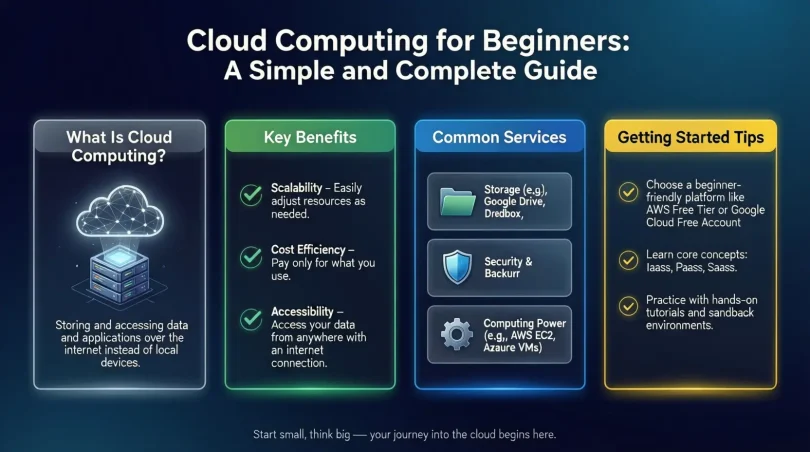
Cloud computing is the delivery of computing services through the internet instead of using local computers or physical servers. These services include storage, servers, databases, networking, software, and analytics. Users can access these resources anytime and from anywhere with an internet connection.
In simple terms, cloud computing means using someone else’s computer through the internet. Instead of saving files on your personal device, you store them online. Instead of installing software on your computer, you use it through a web browser.
There are three main types of cloud services. Infrastructure as a Service provides basic computing resources like virtual machines and storage. Platform as a Service offers tools for developers to build applications. Software as a Service allows users to access applications directly, such as email or document editors.
Cloud computing for beginners becomes easier when you think of it as renting technology instead of buying it. You only pay for what you use, and you can upgrade or downgrade anytime. This flexibility is one of the biggest reasons cloud computing is popular today.
Why is Cloud Computing Important?
Cloud computing is important because it changes how people use technology. It removes the need for expensive hardware and complex setup. Users can start working immediately without worrying about maintenance or updates.
For businesses, cloud computing improves efficiency and reduces costs. Companies can scale their operations quickly, especially during busy periods. Small businesses can compete with large organizations by using the same powerful tools.
For individuals, cloud services offer convenience and security. Files are backed up automatically, reducing the risk of data loss. Collaboration becomes easier because multiple users can work on the same document in real time.
Cloud computing for beginners is important to learn because it is a core skill in modern education and careers. Many jobs now require basic cloud knowledge. Understanding the cloud helps you adapt to digital changes and future technologies.
Detailed Step-by-Step Guide
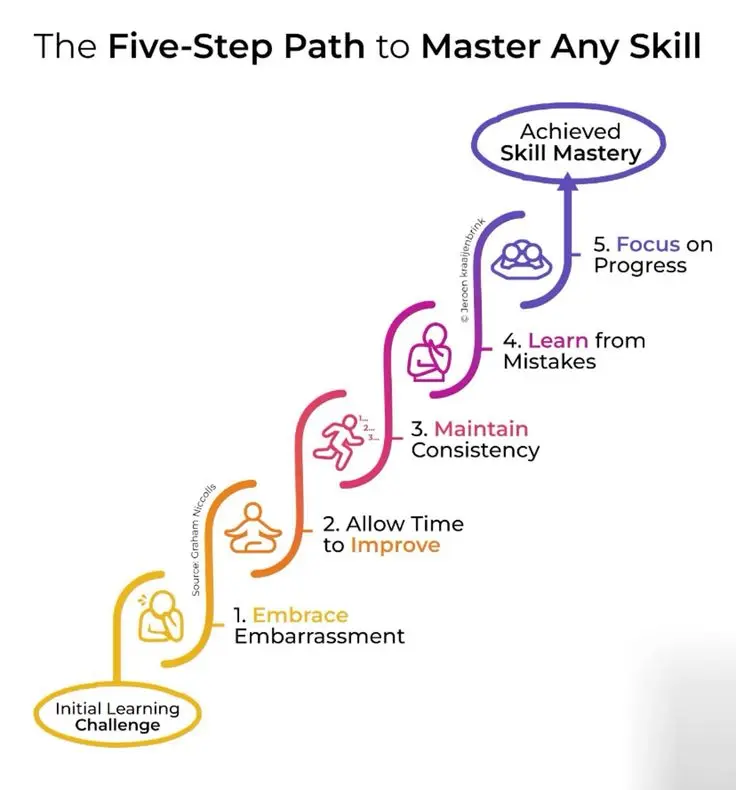
Step 1: Understand Basic Cloud Concepts
Start by learning what the cloud is and what it is not. The cloud is not a physical place you can see. It is a network of data centers that store and process information. These data centers are managed by cloud providers.
Learn common terms like servers, storage, bandwidth, and data centers. Do not rush this step. A clear foundation will help you understand advanced topics later.
Step 2: Identify Common Cloud Services
Next, recognize everyday cloud services. Email platforms, online storage, streaming services, and social media all use cloud technology. This helps you relate cloud computing to real life.
Make a list of apps you use daily and identify which ones are cloud-based. This exercise builds confidence and awareness.
Step 3: Learn Cloud Deployment Models
There are different ways clouds are set up. Public clouds are shared by many users. Private clouds are dedicated to one organization. Hybrid clouds combine both.
For cloud computing for beginners, public clouds are the easiest to understand and use. They are affordable and require no technical setup.
Step 4: Explore Cloud Providers
Major cloud providers offer similar services with different features. Focus on understanding what they offer instead of memorizing names. Learn about storage, computing power, and security features.
Many providers offer free trials. These are great for beginners to practice without spending money.
Step 5: Create a Basic Cloud Account
Sign up for a free cloud account. Follow the instructions carefully and use strong passwords. Enable security features like two-step verification.
Explore the dashboard and menus. Do not worry if it feels overwhelming. Spend time clicking and reading descriptions.
Step 6: Practice Simple Tasks
Start with basic tasks such as uploading files, creating folders, or using online documents. Practice sharing files with others and setting permissions.
These simple actions help you understand how cloud systems work and build confidence.
Step 7: Learn About Cloud Security
Security is an important part of cloud computing. Learn how data is protected and what responsibilities users have. Understand passwords, encryption, and access control.
For beginners, following basic security practices is enough to stay safe.
Step 8: Understand Pricing Basics
Cloud services use pay-as-you-go pricing. Learn how usage is measured. Understand free limits and avoid unnecessary costs.
Review billing dashboards regularly to stay in control.
Step 9: Use Cloud for Collaboration
Practice working with others using cloud tools. Share documents, leave comments, and track changes. This shows the true power of cloud computing.
Collaboration is one of the biggest advantages of the cloud.
Step 10: Continue Learning Gradually
Cloud computing is a large field. Do not try to learn everything at once. Move step by step and focus on practical use.
Cloud computing for beginners is a journey, not a race.
Benefits of Cloud Computing
- Easy access from anywhere with internet
- Lower costs compared to physical systems
- Automatic updates and maintenance
- High data security and backups
- Scalable resources based on needs
- Improved collaboration and teamwork
- Faster deployment of applications
- Environmentally friendly technology
Disadvantages / Risks
- Internet dependency for access
- Possible data privacy concerns
- Limited control over infrastructure
- Unexpected costs if usage is unmanaged
- Learning curve for new users
- Downtime risks from service outages
Common Mistakes to Avoid
Many beginners make mistakes when starting with cloud technology. One common mistake is ignoring security settings. Always review access permissions and passwords.
Another mistake is misunderstanding pricing. Beginners sometimes forget to monitor usage, leading to higher bills. Always check usage reports.
Some users try to learn everything at once. This causes confusion and frustration. Focus on basics first and build slowly.
Not backing up important data is another error. Even though clouds are reliable, backups add extra safety.
Finally, avoid choosing tools without understanding your needs. Select cloud services that match your goals and skill level.
FAQs
What is cloud computing in simple words?
Cloud computing means using computers and software through the internet instead of your own device. You can store data, run programs, and access services online anytime.
Is cloud computing safe for beginners?
Yes, cloud computing is safe when basic security steps are followed. Using strong passwords and enabling security features helps protect data.
Do I need technical skills to use cloud services?
No advanced skills are required. Cloud computing for beginners focuses on easy tools designed for non-technical users.
Can cloud computing save money?
Yes, users pay only for what they use. This reduces the cost of buying and maintaining hardware and software.
What are examples of cloud computing?
Examples include online email, file storage, video streaming, and collaboration tools used for documents and meetings.
How can beginners start learning cloud computing?
Beginners should start by understanding basics, using free tools, and practicing simple tasks regularly.
Expert Tips & Bonus Points
Start small and stay consistent. Learning a little each day is better than rushing.
Always read service descriptions carefully before using new features.
Use free plans to practice and test ideas without risk.
Keep your data organized with clear folder names and labels.
Stay updated with basic trends to understand how cloud technology evolves.
Remember that cloud computing for beginners is about practical use, not perfection.
Conclusion
Cloud computing has become an essential part of modern life and technology. From personal storage to business operations, it offers flexible and powerful solutions for users of all levels. For beginners, understanding the cloud opens the door to new opportunities in learning, work, and innovation.
This guide to cloud computing for beginners explained the core concepts in simple language. You learned what cloud computing is, why it matters, and how to start step by step. By understanding benefits, risks, and common mistakes, you are better prepared to use cloud services wisely and safely.
The cloud is not just a trend. It is the foundation of future technology. Skills related to cloud systems are becoming more valuable every year. Even basic knowledge can improve productivity and confidence.
As you move forward, keep exploring and practicing. Use cloud tools in your daily activities and observe how they make tasks easier. With patience and curiosity, anyone can master the basics. Cloud computing for beginners is the first step toward a smarter and more connected digital future.